Our mission
Our expertise is in population ecology, simulation modeling and statistics, and our passion is wildlife conservation. We combine our expertise and passion in creative ways. For example, we have:
- Built Population Viability Analysis (PVA) models to assess the conservation status and rank management options for turtles and tortoises, including the desert tortoise, gopher tortoise, and bog turtle.
- Used capture-mark-recapture and telemetry data to model survival for desert tortoise, red knot, and many other species.
- Developed landscape scale resource selection function (RSF) models to assess habitat use intensity for mule deer, elk, and bighorn sheep- in collaboration with the Stewart lab at UNR.
- Examined the demographic drivers of shifting range margins at a woodrat hybrid zone in CA (in collaboration with Matocq lab at UNR).
- Modeled the impact of sylvatic plague on prairie dog and black-footed ferret populations.
- Assessed the success of a long-term effort to reintroduce tortoises to Espanola island in Galapagos.
Who we are
The A.P.E. lab currently includes Dr. Kevin Shoemaker (Associate Professor, NRES Department, UNR), PhD student Chris Smith, and MS student Colton Irons.
Former A.P.E. lab members include Dr. Elizabeth Hunter (former postdoc; now Assistant Unit Leader at the Virginia Cooperative Fish and Wildlife Research Unit), Danielle Miles, Dr. Margarete Walden and Dr. Miranda Crowell and Nathan Cook (completed M.S. in 2018; now Biologist with the State of Washington).
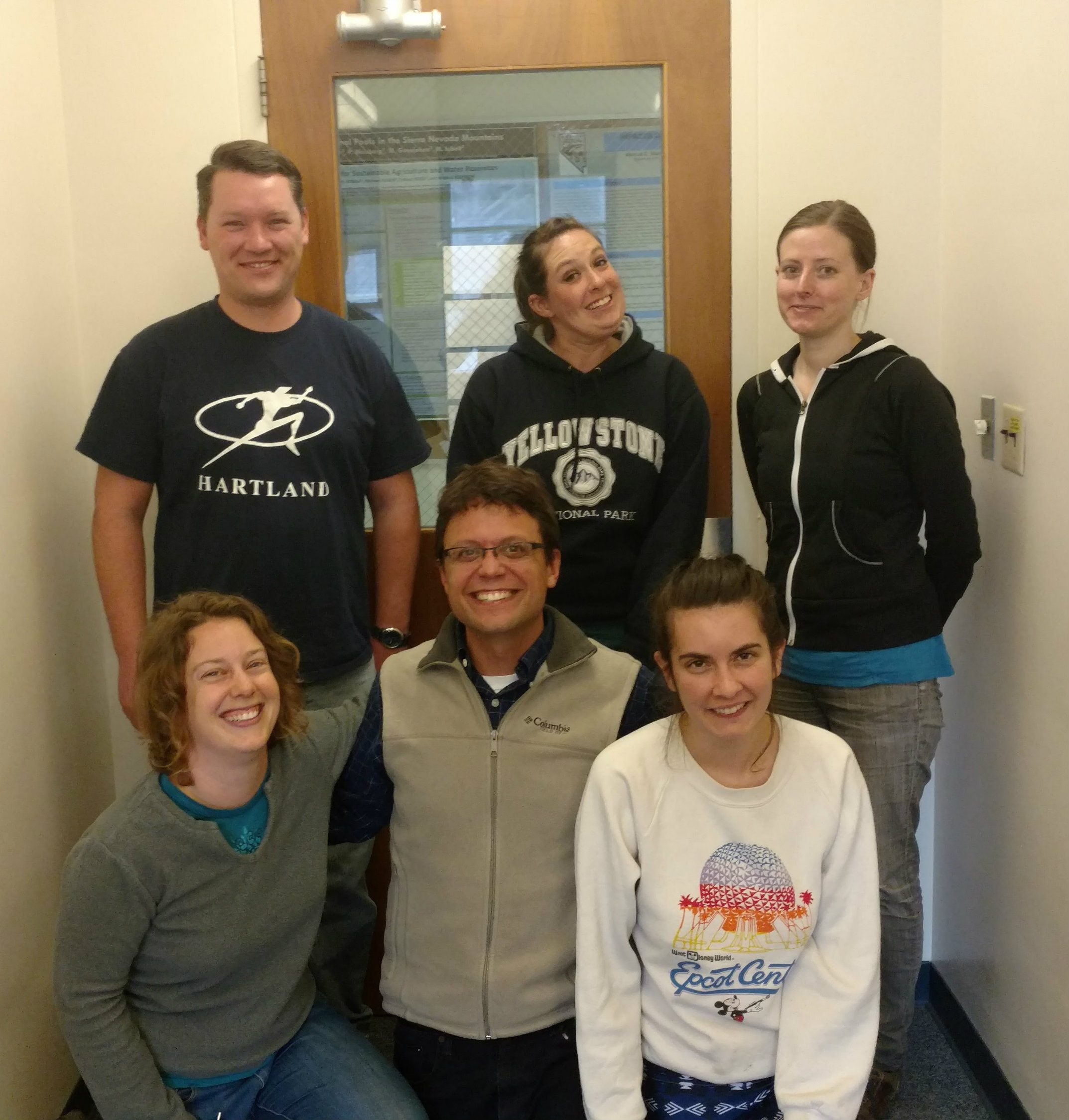 (clockwise from top left: Nathan Cook, Miranda Crowell, Margarete Walden, Danielle Miles, Kevin Shoemaker, and Elizabeth Hunter)
Join us!
If you are interested in joining the A.P.E. lab as a graduate student or postdoc, here are a few things to keep in mind:
- All graduate students will have funding, either through a teaching assistantship (TA) or an research assistantship (RA, usually through external grants). We don’t have many TAships in the NRES department, and it costs about $50k/year to support a graduate student at UNR as an RA. RAships are available periodically- contact Dr. Shoemaker if you are interested.
- In general, you must have an MS degree to join the lab as a PhD student.
- To be admitted to the program, you must apply! Generally speaking, most students apply in the spring (Feb.-Mar.) and start in August. But there are good reasons to start in January, especially for MS students (two field seasons sandwiched between your semesters as opposed to one).
- Some practical advice for graduate students!
Contact us
Please email Dr. Shoemaker if you have any questions!