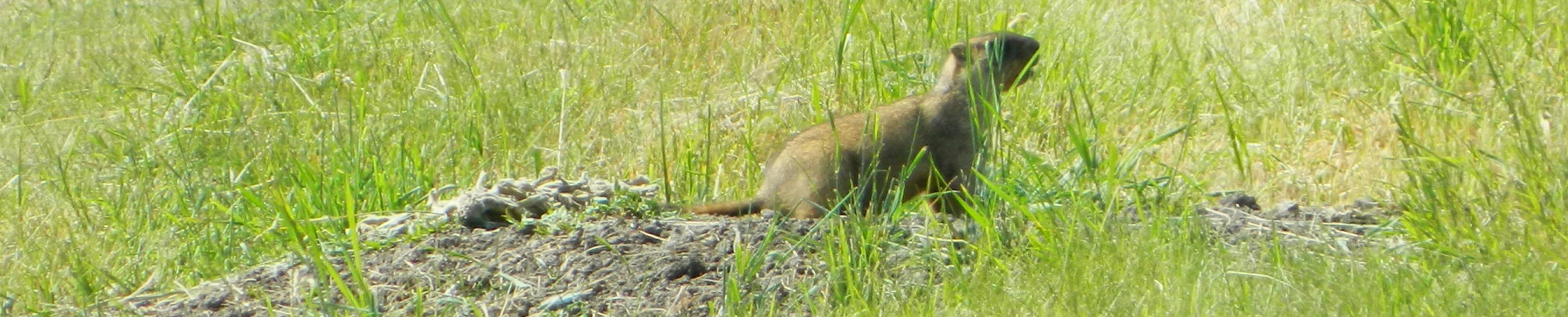
Understanding the potential for widespread plague resistance in prairie dogs

Prairie dogs are keystone species of North America’s central grasslands, and have experienced dramatic population reductions over the past century due to sylvatic plague, a highly virulent disease introduced to North America ca. 1900. The APE lab is involved in building a novel host-resistance modeling framework to investigate the genetic, demographic and environmental conditions that promote or impede resistance to plague and other similar virulent pathogens in complex and dynamic ecosystems. The prairie dog-plague system provides an excellent model to understand the conditions under which evolutionary rescue occurs in complex and dynamic ecological systems, and will help illuminate a novel and potential large-scale conservation approach to address 1) the biggest threat facing the prairie dog ecosystem that spans from Canada to Mexico - plague and 2) species around the world threatened with novel diseases and climate change. ...
January 17, 2018 · Kevin Shoemaker

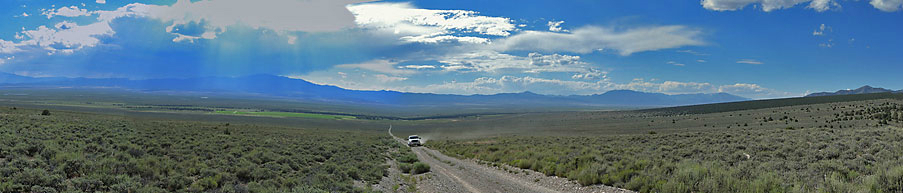
Understanding the broader ecological impacts of PJ removal

Investigating the broad ecological impacts of Pinyon and Juniper removal in Nevada Thousands of acres of pinyon and juniper woodlands (PJ) will be removed over the next four years to support targeted wildlife populations, notably Greater sage-grouse. We are investigating the effects of PJ removal on insect communities and the bats and reptile species that rely upon them using a rigorous experimental design. Insects can serve as useful indicators of natural disturbances, provide critical pollination services, and represent a major wildlife food resource for many species, including an impressive diversity of bats and reptiles. Little is known about habitat use and disturbance tolerance for bats and reptiles in the Great Basin. For example, some bat species may benefit from tree removal (e.g., cleared areas may improve foraging or success), while other species may be negatively impacted by tree removal (e.g, loss of roosting sites). We are establishing a set of fixed transects, each spanning a gradient from sagebrush steppe to PJ woodland and monitored 3 to 4 times annually. Transects will be established in four project areas distributed widely across the Great Basin- including the Sheldon-Hart refuges and the Ely region (near Great Basin National Park). ...

October 12, 2016 · Kevin Shoemaker and Danielle Miles