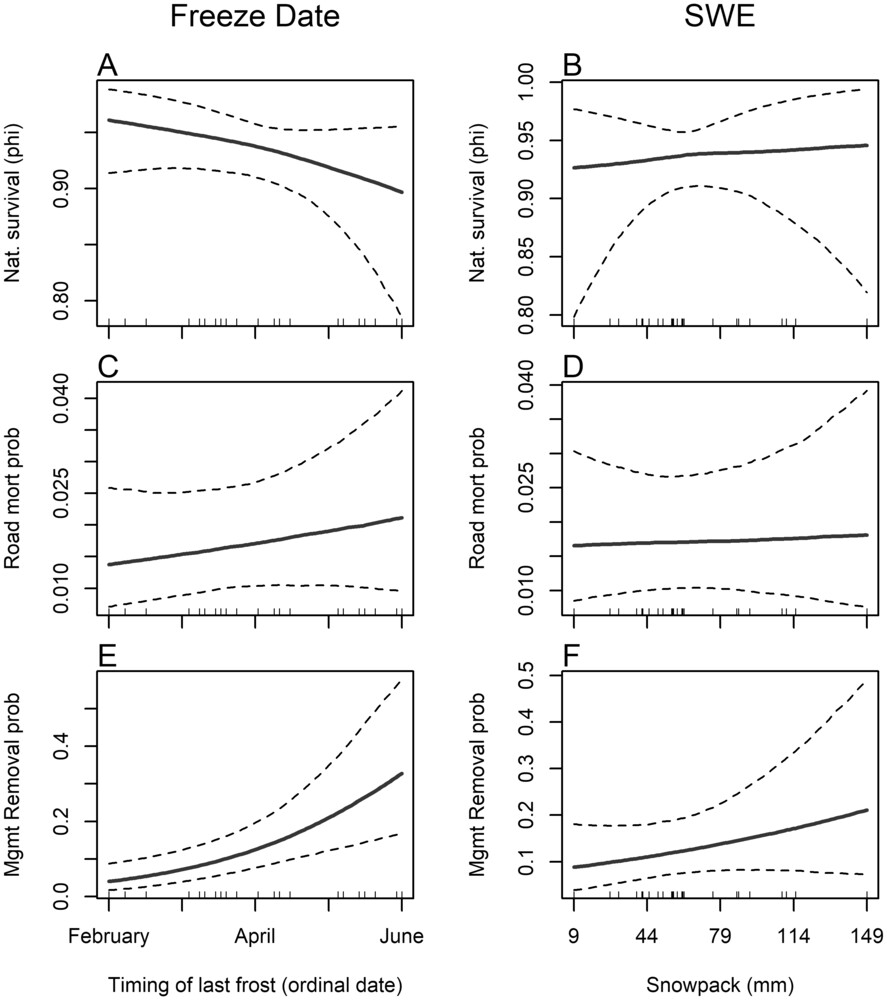
Plots of black bear survival and mortality probability as a function of freeze date and snowpack

Late season frosts and changing snowpack may exacerbate human-bear conflicts

Black bears along the urban-wildland interface in northwestern Nevada increasingly rely on human food sources when natural forage fails — and this study shows that a late spring frost is a particularly strong trigger for that failure, more so than winter snowpack. Using 25 years of capture-recapture data on 509 bears (1998-2022), we found that late final-freeze dates were associated with lower natural survival and a higher probability that a bear would be killed by a vehicle strike or removed by wildlife managers. ...
August 27, 2025 · Kevin T. Shoemaker, Heather E. Reich, Perry J. Williams, Megan J. Osterhout, Joshua P. Vasquez, Jon P. Beckmann, Carl W. Lackey, Kelley M. Stewart
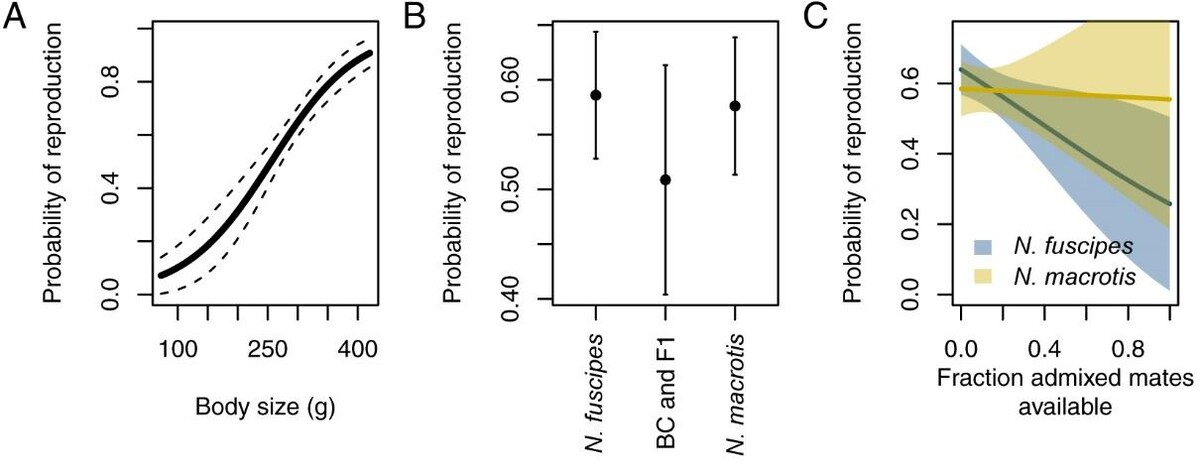
Plots of woodrat probability of reproduction versus body size and fraction of admixed mates available

Asymmetric mate preference and reproductive interference mediate climate-induced changes in mate availability in a small mammal hybrid zone

At the boundary between two woodrat species (Neotoma fuscipes and N. macrotis) in the Sierra Nevada foothills, drought has driven differential survival between the species and their hybrids, changing who is available to mate with whom. Using six years of field-measured parentage data, we show that as conspecific mates became scarcer, hybridization rates increased — but not symmetrically. Reproductive success was skewed between the parental lineages, F1 hybrid males had near-zero reproductive success, and nearly all surviving hybrids had one purebred parent, pointing to partial genomic incompatibility between the two species. ...

August 8, 2024 · Marjorie D. Matocq, Elizabeth A. Hunter, Peter J. Murphy, Casey L. Adkins, Kevin T. Shoemaker

Modeling critical habitat breadth for Gopherus tortoises

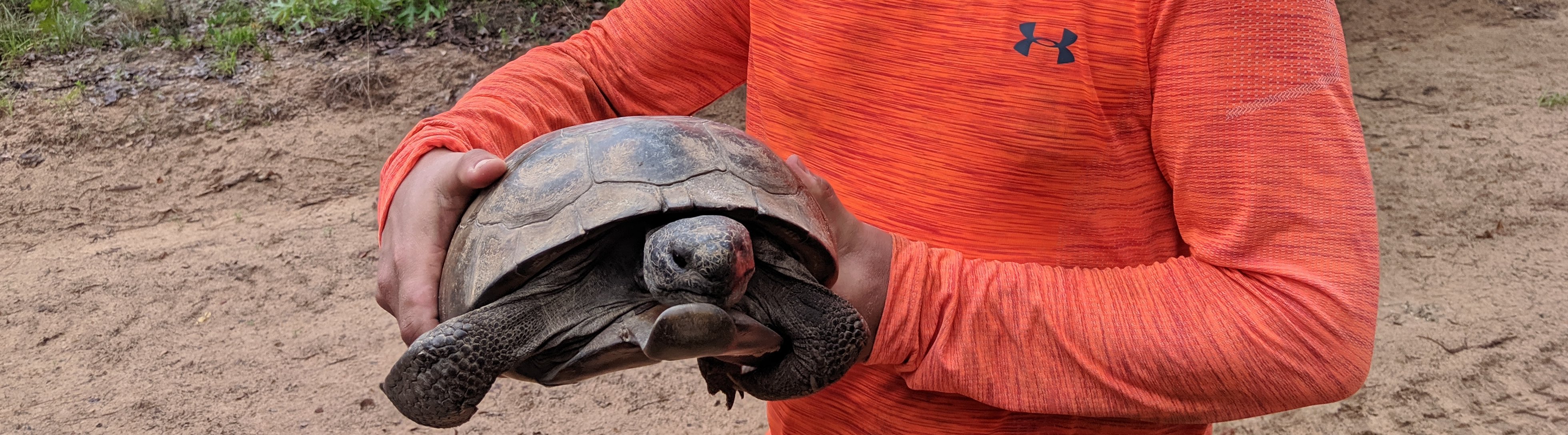
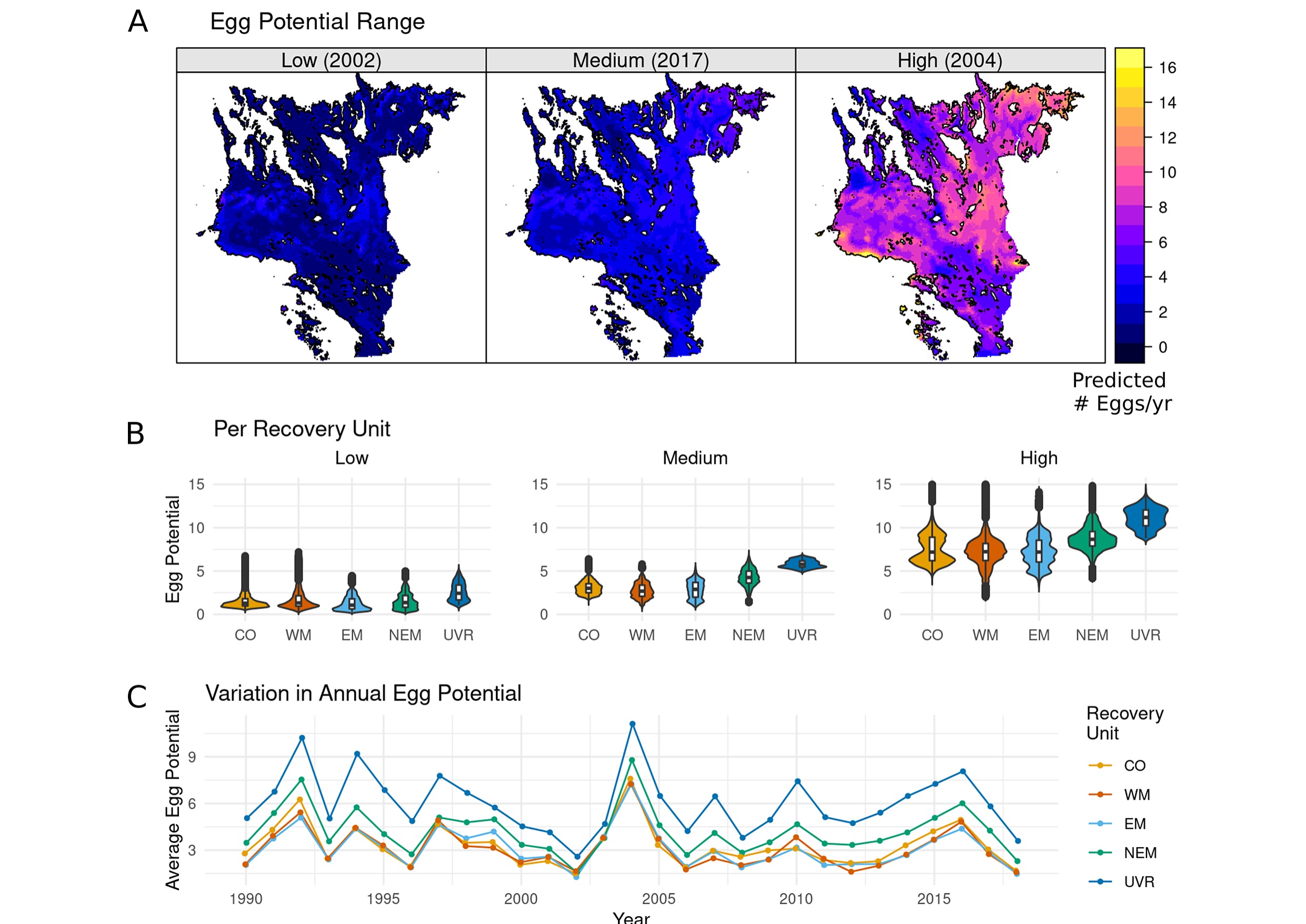
The A.P.E. lab is leading a large, multi-institution collaboration investigating the climate resilience of populations of gopher tortoise (Gopherus polyphemus) and Mojave desert tortoise (Gopherus agassizii). In this project, funded by the Department of Defense (SERDP program), we are building models of tortoise vital rates (age-structured survival, fecundity) as functions of environmental and climatic covariates and simultaneously assessing for evidence of local behavioral and physiological adaptations. We are then using these models to quantify the range of environmental change that populations can withstand in situ without the need for natural selection or long-distance movement to more suitable habitats. ...

April 25, 2020 · Kevin Shoemaker