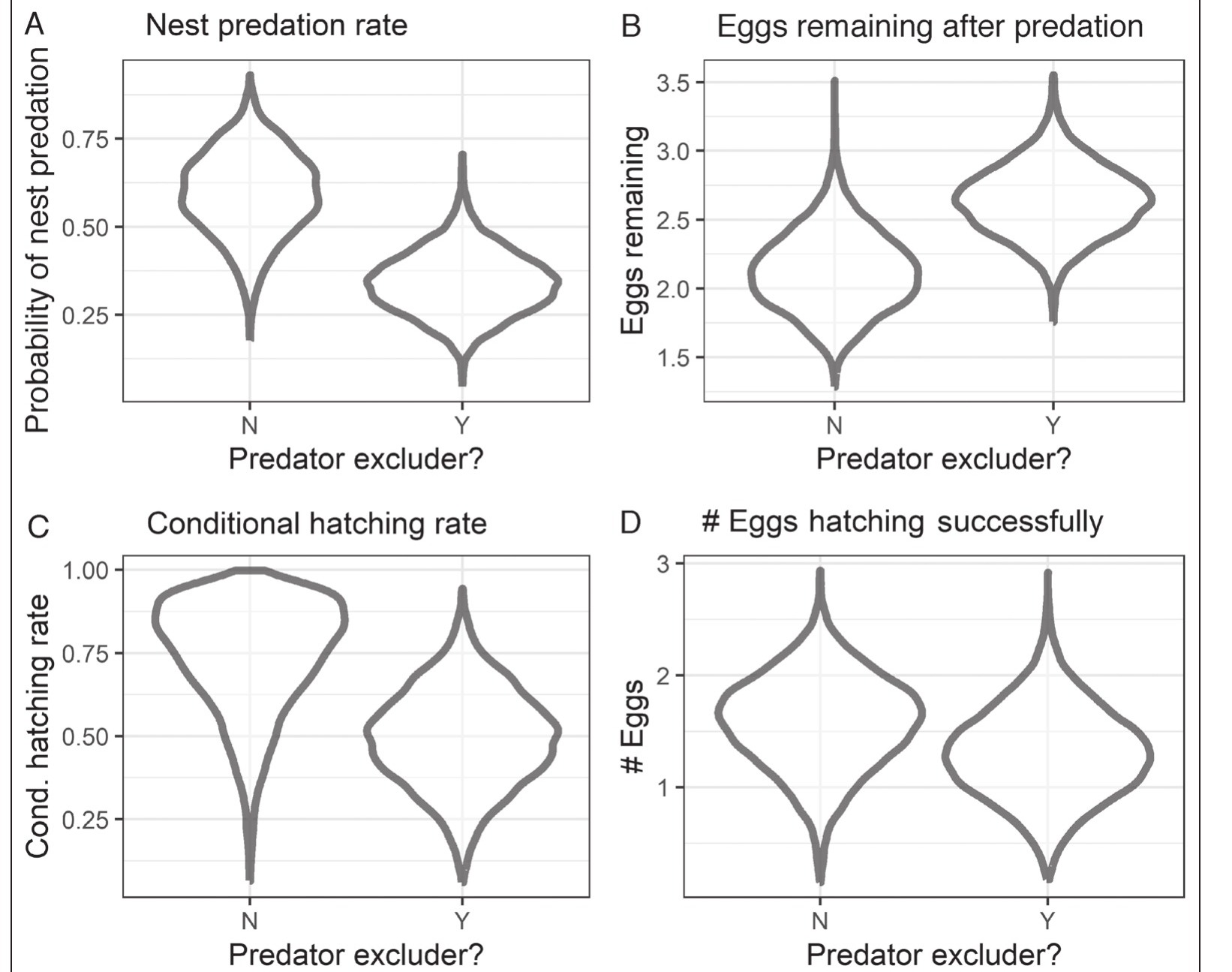
Violin plots comparing nest predation rate, eggs remaining, conditional hatching rate, and eggs hatched between protected and unprotected Bog Turtle nests

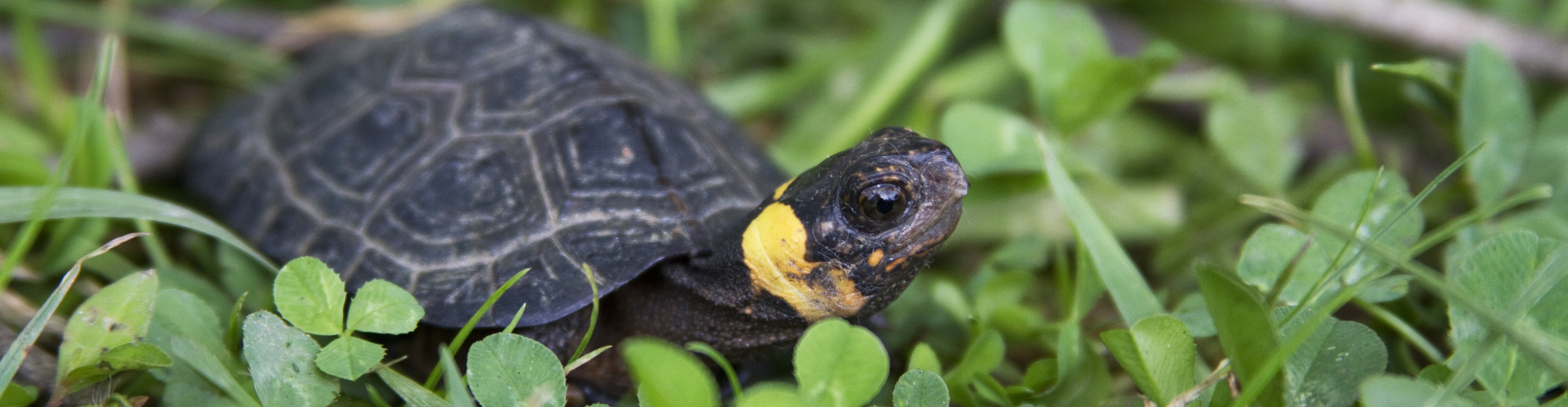
Bog Turtle (Glyptemys muhlenbergii) Nesting Ecology and the Efficacy of Predator Excluders in New York

Nest predation is a major concern for the federally threatened Bog Turtle (Glyptemys muhlenbergii), and wire-mesh predator excluders are a common conservation tool — but caging a nest can also alter its temperature and incubation conditions in ways that might backfire. Over 4 years across 9 New York wetland sites, this study monitored 77 Bog Turtle nests, comparing predation rates and hatching outcomes between nests with and without predator excluders. ...
October 4, 2024 · Suzanne K. Macey, Andrew T. Myers, Jason Tesauro, Arden Feil, Karina Polanco, J. Alan Clark, Kevin T. Shoemaker
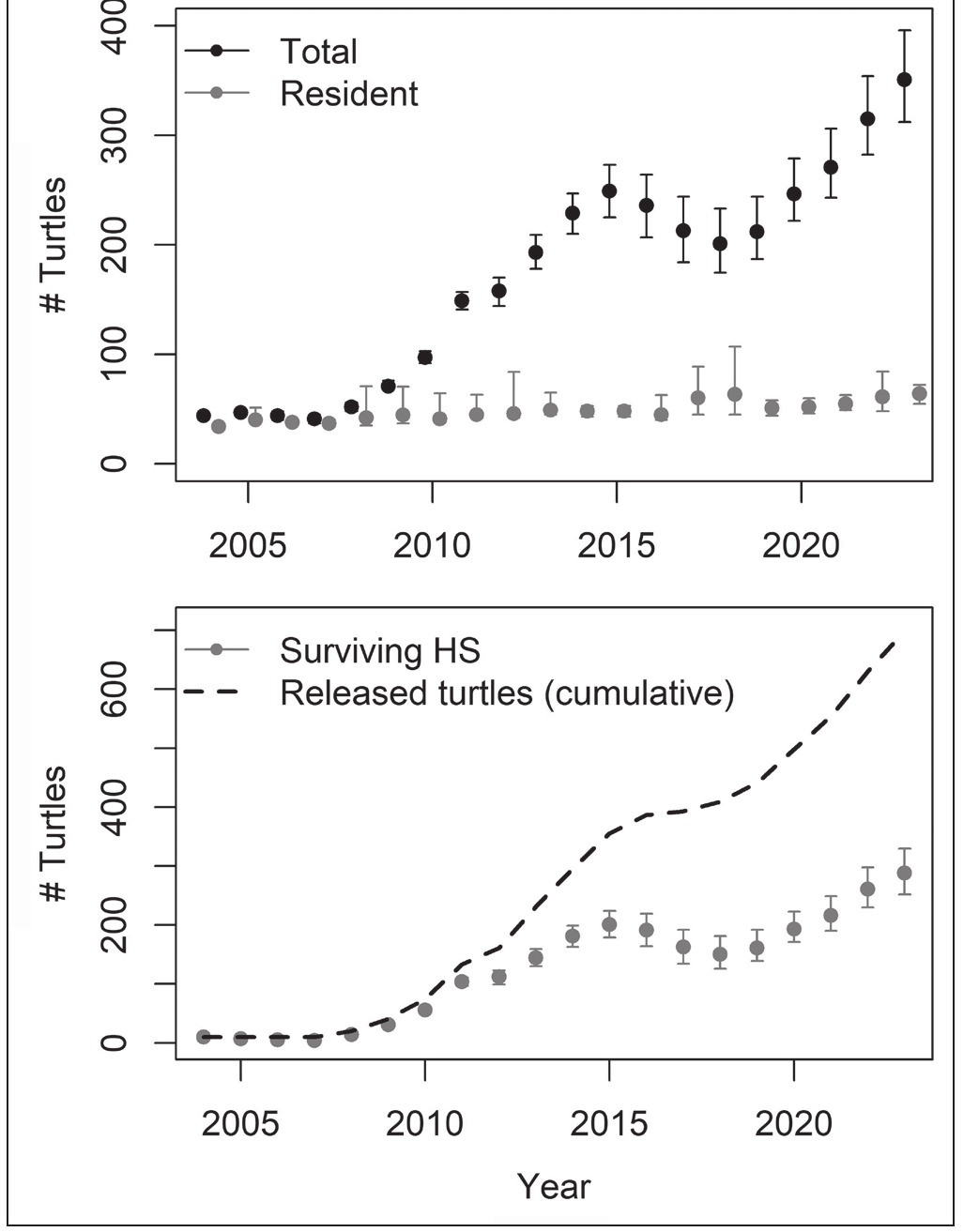
Estimated Blanding's Turtle abundance at Great Meadows National Wildlife Refuge from 2003 through 2022

Recovery of a Blanding's Turtle Population Through Nest Protection and Headstarting

The Blanding’s Turtle (Emydoidea blandingii) population at Great Meadows National Wildlife Refuge in Massachusetts had dwindled from an estimated 135 adults in the 1970s to just 54 by 2004, with most survivors old and few juveniles in evidence — a classic signature of a population starved of recruitment. In response, the project began protecting nests in 2003 and headstarting hatchlings (raising them in captivity for their vulnerable first year) before releasing them back into the wetland starting in 2007. ...

June 6, 2024 · Cara L. McElroy, Bryan Windmiller, John Berkholtz, Emilie R. Wilder, James F. Welch, Kevin T. Shoemaker, Matthew D. Kamm
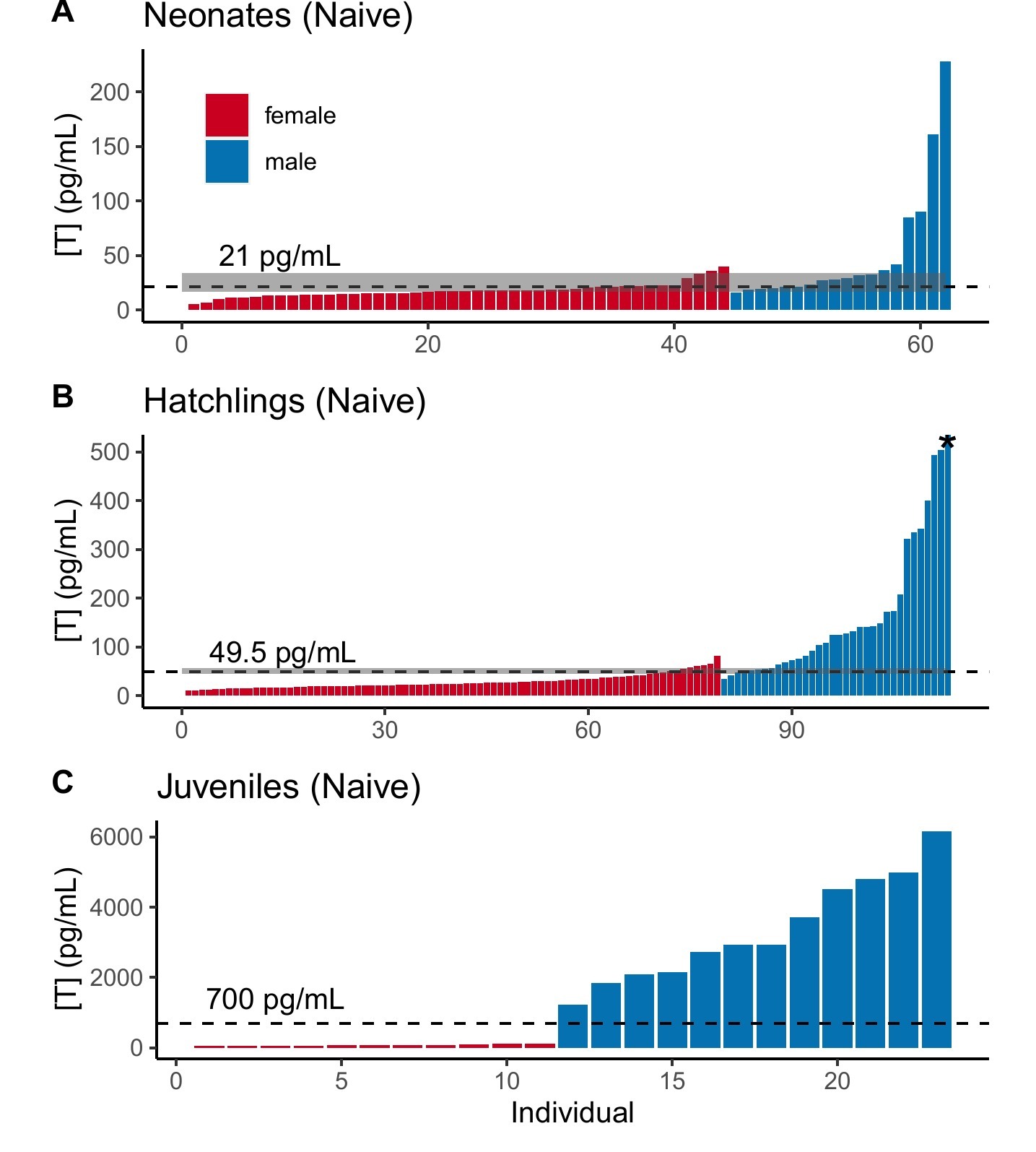
Naive testosterone concentrations by sex in neonate, hatchling, and juvenile gopher tortoises

A comparison of non-surgical methods for sexing young gopher tortoises

Like many turtles, gopher tortoises (Gopherus polyphemus) have temperature-dependent sex determination, but young individuals lack any visible external difference between males and females — making it hard to track how a warming climate might be skewing sex ratios in wild populations. The current gold standard, laparoscopic surgery, requires specialized equipment, a trained surgeon, and months of captive rearing. This study tests three non-surgical alternatives — baseline blood testosterone, testosterone after a hormone challenge, and morphological measurements — across neonates, hatchlings, and juveniles, validating each against laparoscopy. ...

June 14, 2022 · Kevin J. Loope, David C. Rostal, Margarete A. Walden, Kevin T. Shoemaker, Elizabeth A. Hunter

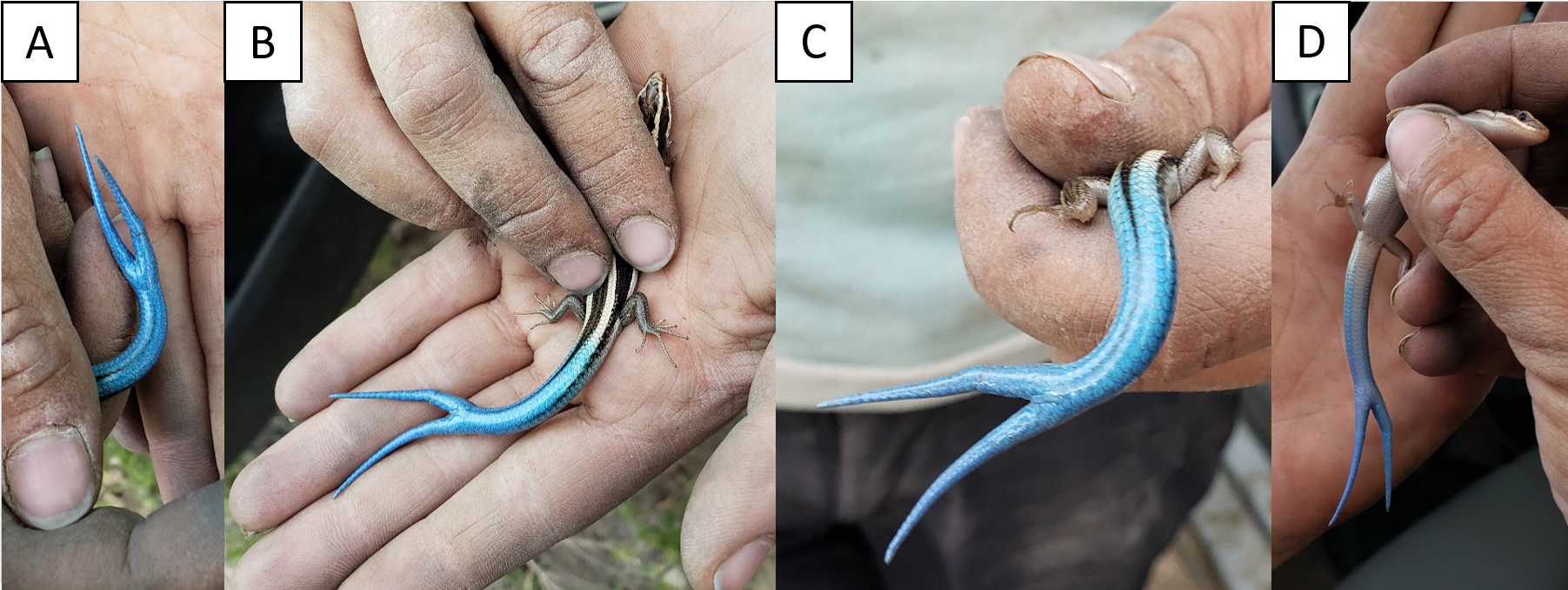
Tail bifurcation in Plestiodon skiltonianus

As part of our field research, members of the A.P.E. lab occasionally stumble on a novel observation worthy of a published ’natural history note’. Here, we note the observation of tail bifurcation in the western skink, Plestiodon skiltonianus: This is the first publication for UNR undergraduate Chasey Danser (pictured below doing field research)- congratulations Chasey!! (Photo credit: Danielle C. Miles) Miles, D.C., Danser, C., and K.T. Shoemaker. 2020. Tail bifurcation in Plestiodon skiltonianus. Herpetology Notes. https://www.biotaxa.org/hn/article/viewFile/57502/60850

May 21, 2020 · K.T. Shoemaker and D.C. Miles

Conservation of bog turtle metapopulations in the eastern USA

Dr. Shoemaker’s PhD dissertation focused on the conservation of bog turtles (Glyptemys muhlenbergii) in New York and Massachusetts. Building upon an existing capture-recapture dataset, he estimated population vital rates and abundance of these turtles in small wetlands in eastern New York (Dutchess County) and assessed for evidence of dispersal within a complex of multiple neighboring wetlands. His work also used microsatellite genotypes to further assess gene flow within these wetland complexes. ...

February 20, 2020 · Kevin Shoemaker