An integrated model improves inferences about survival in the Mojave desert tortoise
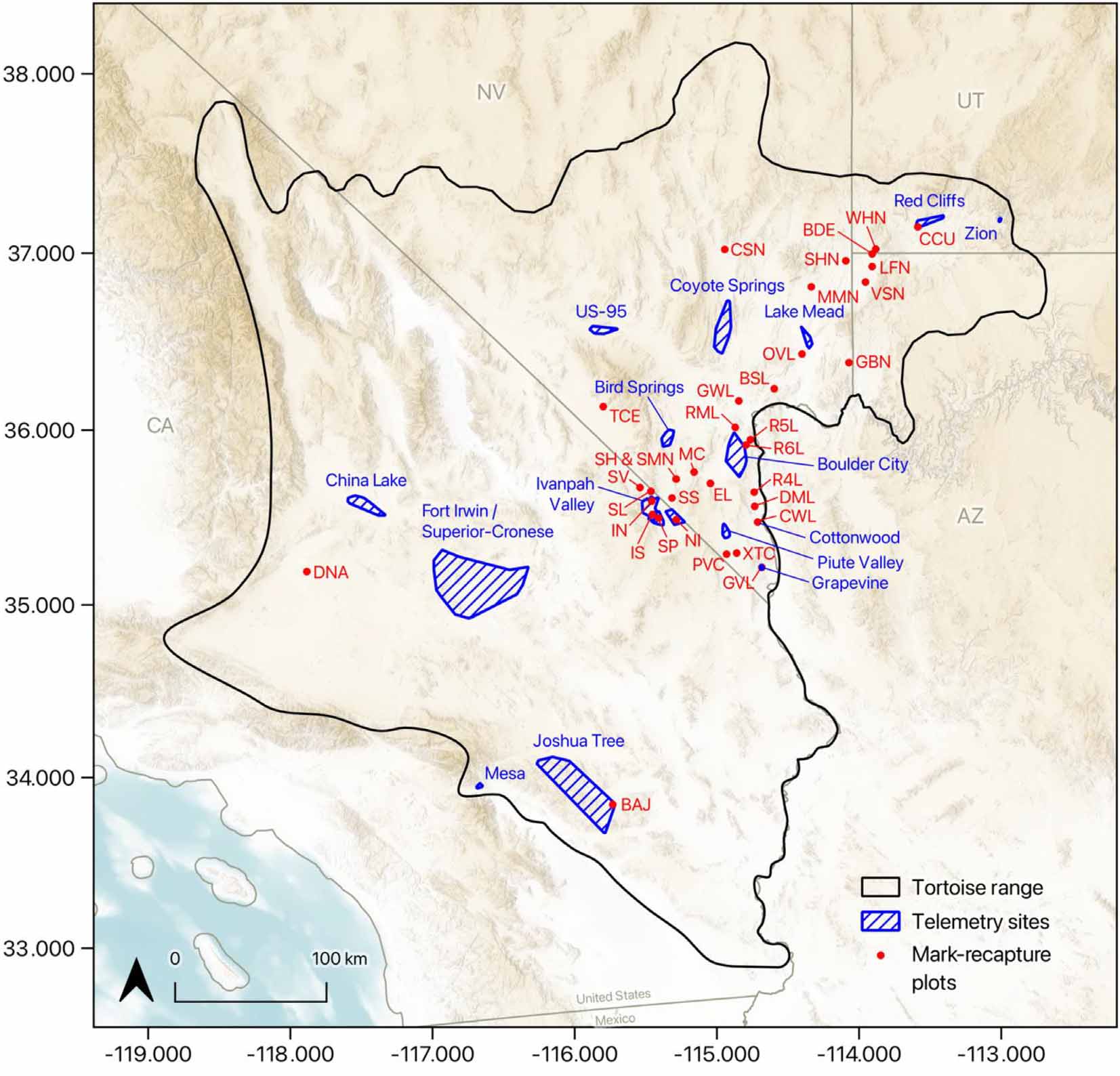
Despite decades of protection under the Endangered Species Act, the Mojave desert tortoise (Gopherus agassizii) continues to decline, and inconsistent historical monitoring has made it difficult to pin down exactly why. This study combines two large, previously separate datasets — nearly 4,000 mark-recapture tortoises across 35 sites (1977-2022) and almost 2,900 radio-tracked tortoises across 22 sites (1988-2022) — into a single integrated survival model. Integrating the two data sources revealed patterns that neither dataset could show on its own: males survive better than females, juveniles and subadults survive worse than adults, and survival improves with total precipitation over the prior two winters and active seasons. The integrated approach also let us tease apart “true” survival (via telemetry) from “apparent” survival (via mark-recapture alone), estimating permanent emigration rates directly for the first time at this scale. ...