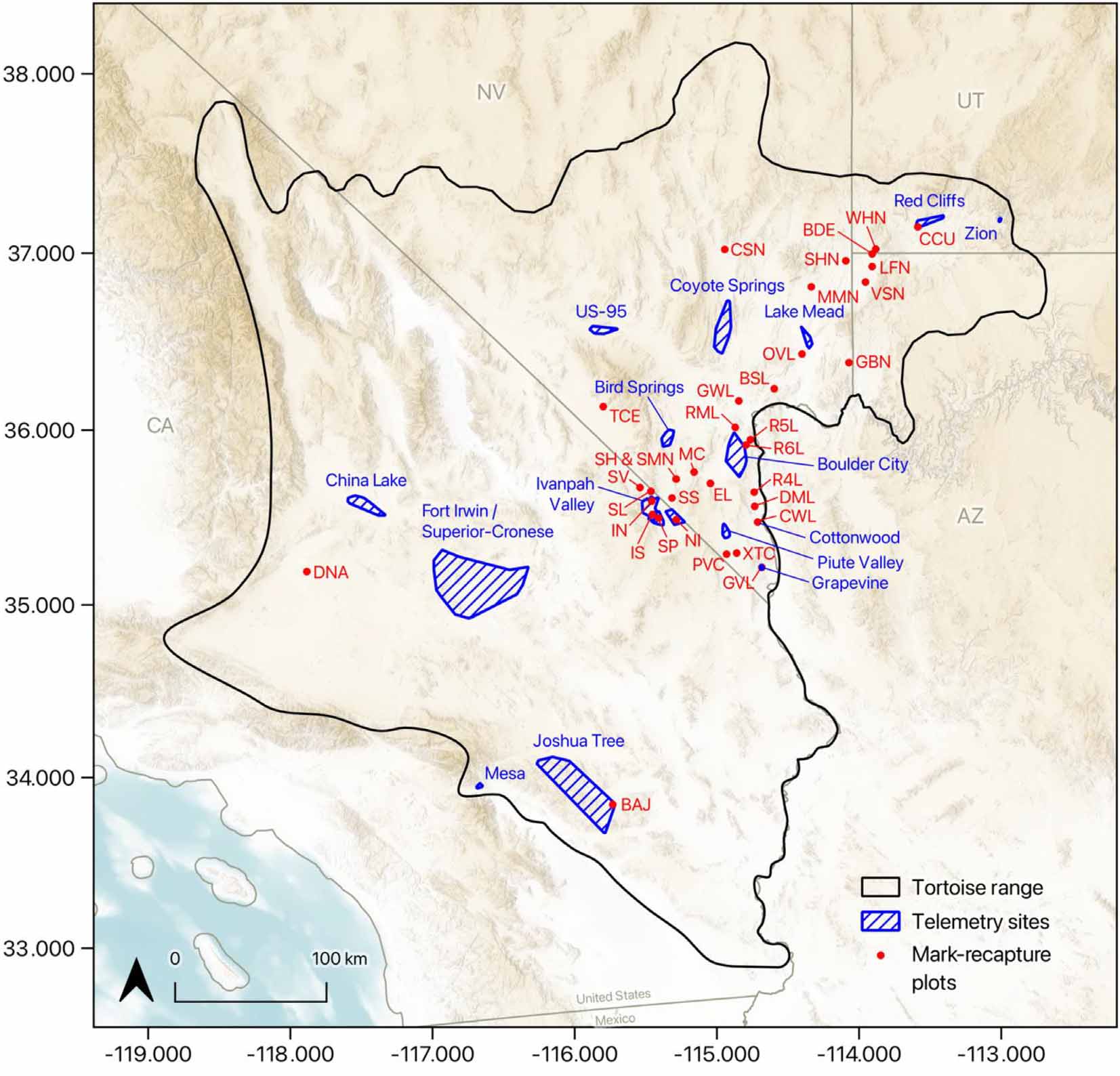
Map of Mojave desert tortoise mark-recapture and telemetry study sites

An integrated model improves inferences about survival in the Mojave desert tortoise

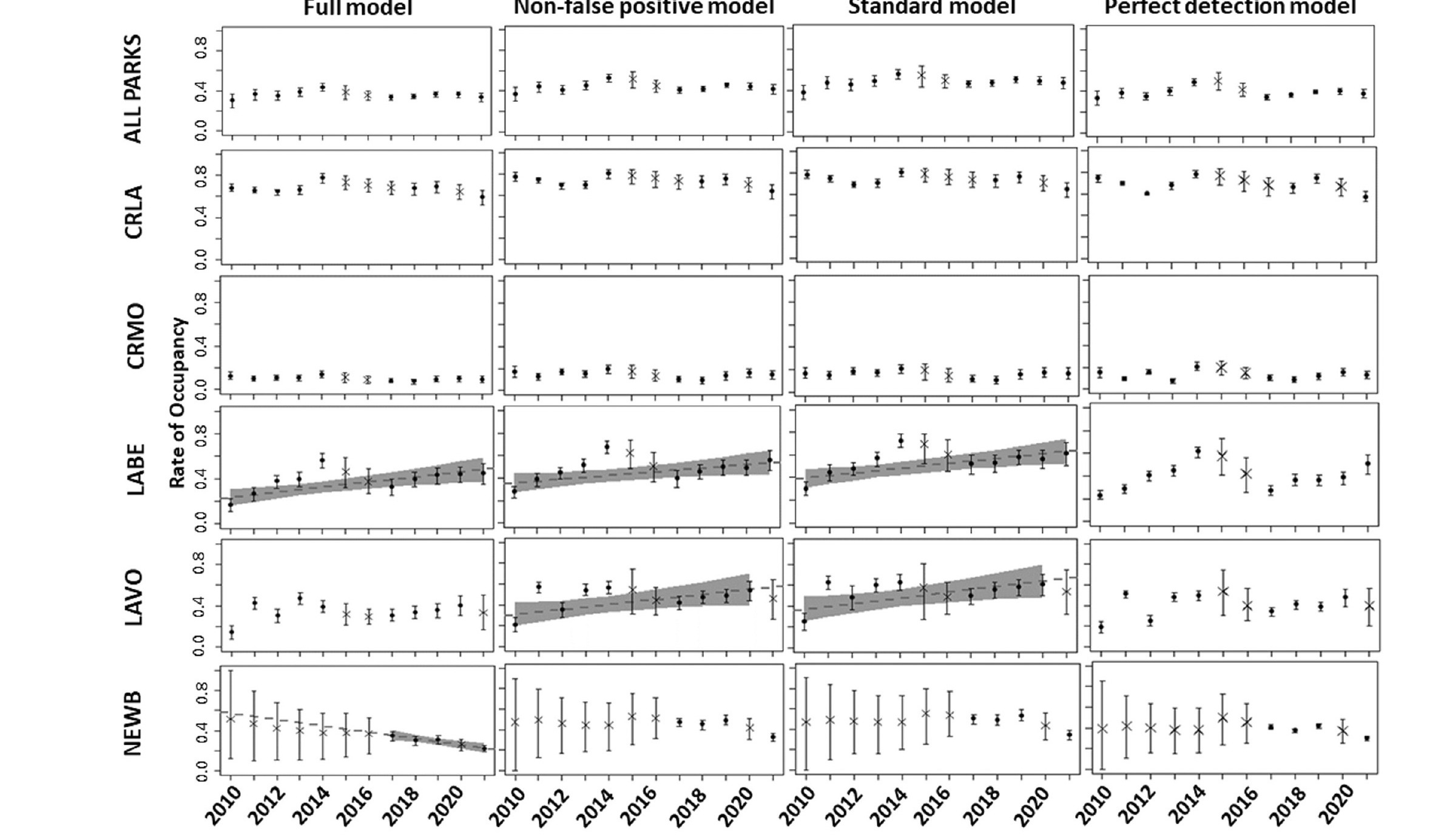
Despite decades of protection under the Endangered Species Act, the Mojave desert tortoise (Gopherus agassizii) continues to decline, and inconsistent historical monitoring has made it difficult to pin down exactly why. This study combines two large, previously separate datasets — nearly 4,000 mark-recapture tortoises across 35 sites (1977-2022) and almost 2,900 radio-tracked tortoises across 22 sites (1988-2022) — into a single integrated survival model. Integrating the two data sources revealed patterns that neither dataset could show on its own: males survive better than females, juveniles and subadults survive worse than adults, and survival improves with total precipitation over the prior two winters and active seasons. The integrated approach also let us tease apart “true” survival (via telemetry) from “apparent” survival (via mark-recapture alone), estimating permanent emigration rates directly for the first time at this scale. ...
February 12, 2026 · Steven J. Hromada, Brian Folt, Kevin T. Shoemaker, and coauthors
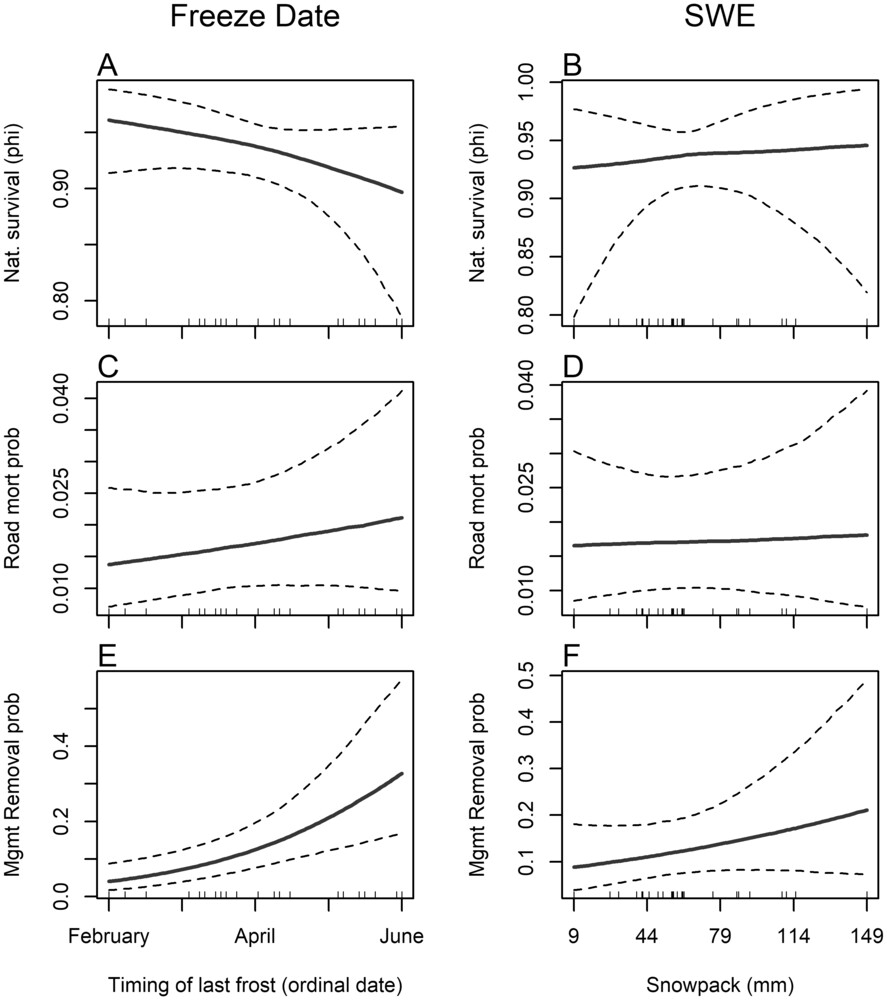
Plots of black bear survival and mortality probability as a function of freeze date and snowpack

Late season frosts and changing snowpack may exacerbate human-bear conflicts

Black bears along the urban-wildland interface in northwestern Nevada increasingly rely on human food sources when natural forage fails — and this study shows that a late spring frost is a particularly strong trigger for that failure, more so than winter snowpack. Using 25 years of capture-recapture data on 509 bears (1998-2022), we found that late final-freeze dates were associated with lower natural survival and a higher probability that a bear would be killed by a vehicle strike or removed by wildlife managers. ...

August 27, 2025 · Kevin T. Shoemaker, Heather E. Reich, Perry J. Williams, Megan J. Osterhout, Joshua P. Vasquez, Jon P. Beckmann, Carl W. Lackey, Kelley M. Stewart

We need better ways to re-evaluate conservation policies when they're founded on flawed research

In November 2023, we discovered serious errors in an influential population model that had helped convince the U.S. Fish and Wildlife Service to deny the gopher tortoise federal protection under the Endangered Species Act. Once corrected, the model’s predictions changed from a mild population decline to a rangewide collapse — yet our attempts to get the decision re-evaluated have been met with resistance. In this PNAS opinion piece, we use the gopher tortoise case to argue for a broader fix: complex demographic models increasingly underpin high-stakes conservation policy, but agencies have no effective mechanism for correcting or re-evaluating decisions once serious flaws in the underlying science come to light. We call for more rigorous, independent technical review of the algorithms behind these models — not just the policy documents that cite them — especially when so much rides on getting the science right. ...

May 7, 2025 · Kevin T. Shoemaker and Kevin J. Loope
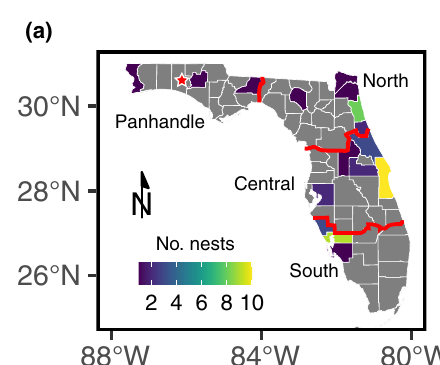
Map of source counties for translocated gopher tortoises in Florida

Common-garden experiment reveals outbreeding depression and region-of-origin effects in a frequently translocated tortoise

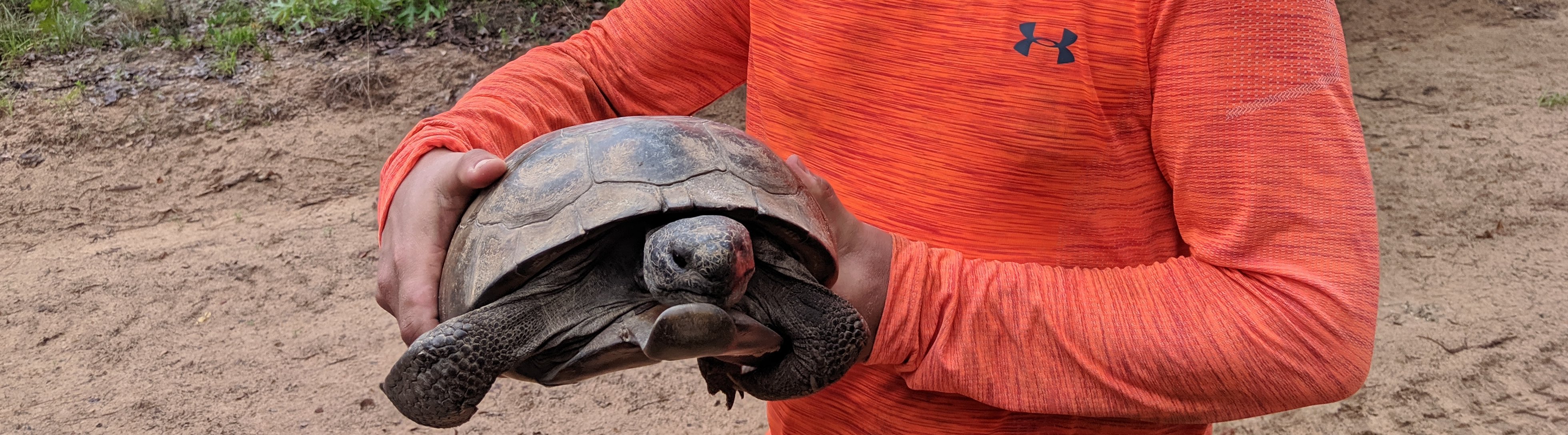
Florida moves more than 10,000 gopher tortoises (Gopherus polyphemus) a year away from development sites to protected recipient sites — a huge, unplanned “common garden” experiment in what happens when genetically and geographically distant tortoises are suddenly mixed together. Using nest data from Nokuse Plantation, a major recipient site in the Florida panhandle, we found two things: hatching success declined as the genetic and geographic distance between a nest’s mother and father increased (a sign of outbreeding depression), and mothers from northeast Florida had consistently lower hatching success than mothers from other regions, regardless of climate. ...

August 13, 2024 · K. J. Loope, J. N. DeSha, M. J. Aresco, K. T. Shoemaker, E. A. Hunter
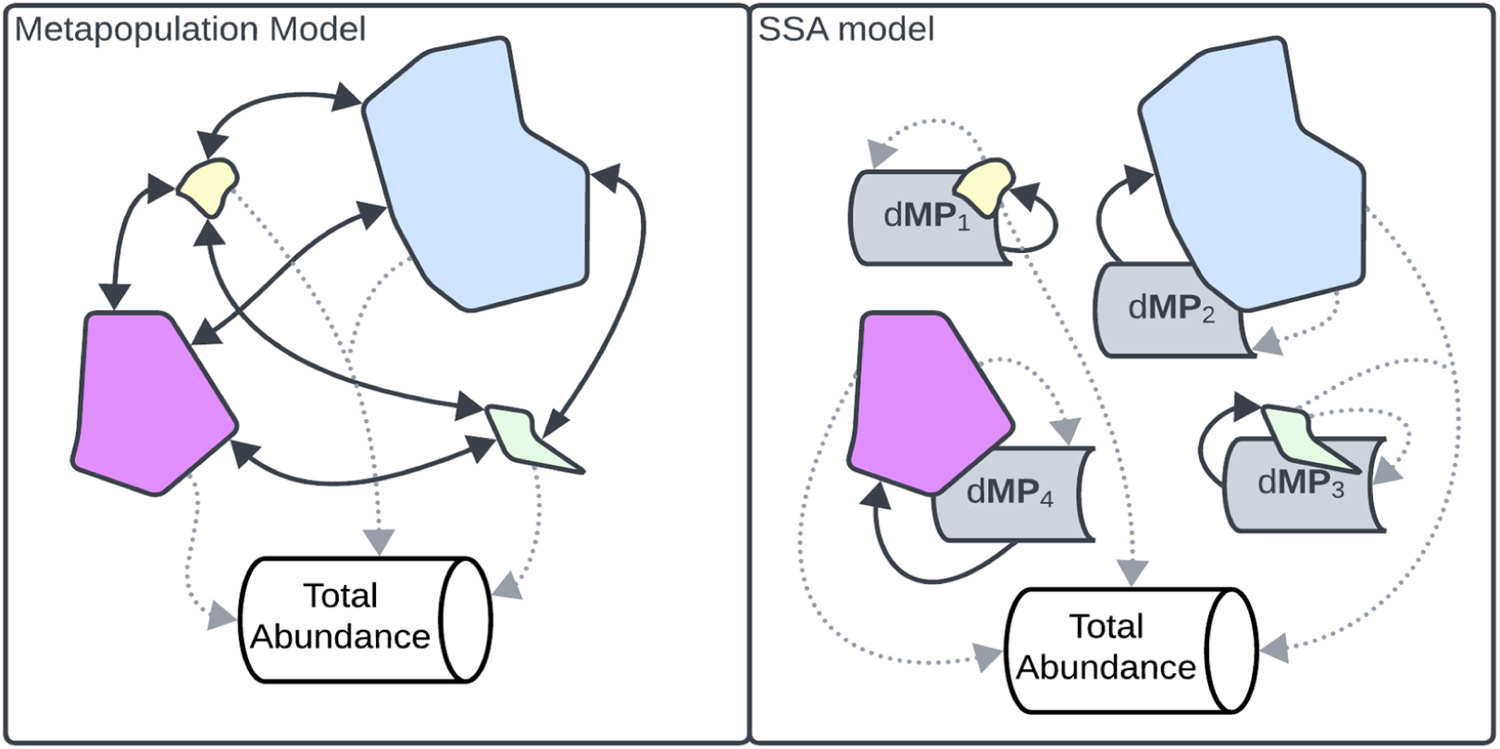
Schematic comparing a standard metapopulation model to the flawed SSA model

Inflated predictions from a flawed model influenced the decision to deny federal protection to the gopher tortoise

In 2022, the U.S. Fish and Wildlife Service withdrew the gopher tortoise (Gopherus polyphemus) as a candidate for federal protection across most of its range, citing a rangewide demographic model that predicted many populations would remain large and self-sustaining. In this note, we identify a serious flaw in that model: rather than modeling immigration as movement between real populations, the model paired each population with an abstract “dummy” metapopulation that could spontaneously generate new immigrants out of nowhere. This created a runaway feedback loop that artificially inflated projected population growth and masked the species’ true vulnerability. ...

July 16, 2024 · Kevin J. Loope, H. Reşit Akçakaya, Kevin T. Shoemaker

Simulation modeling to support restoration of extinct Galapagos giant tortoise populations

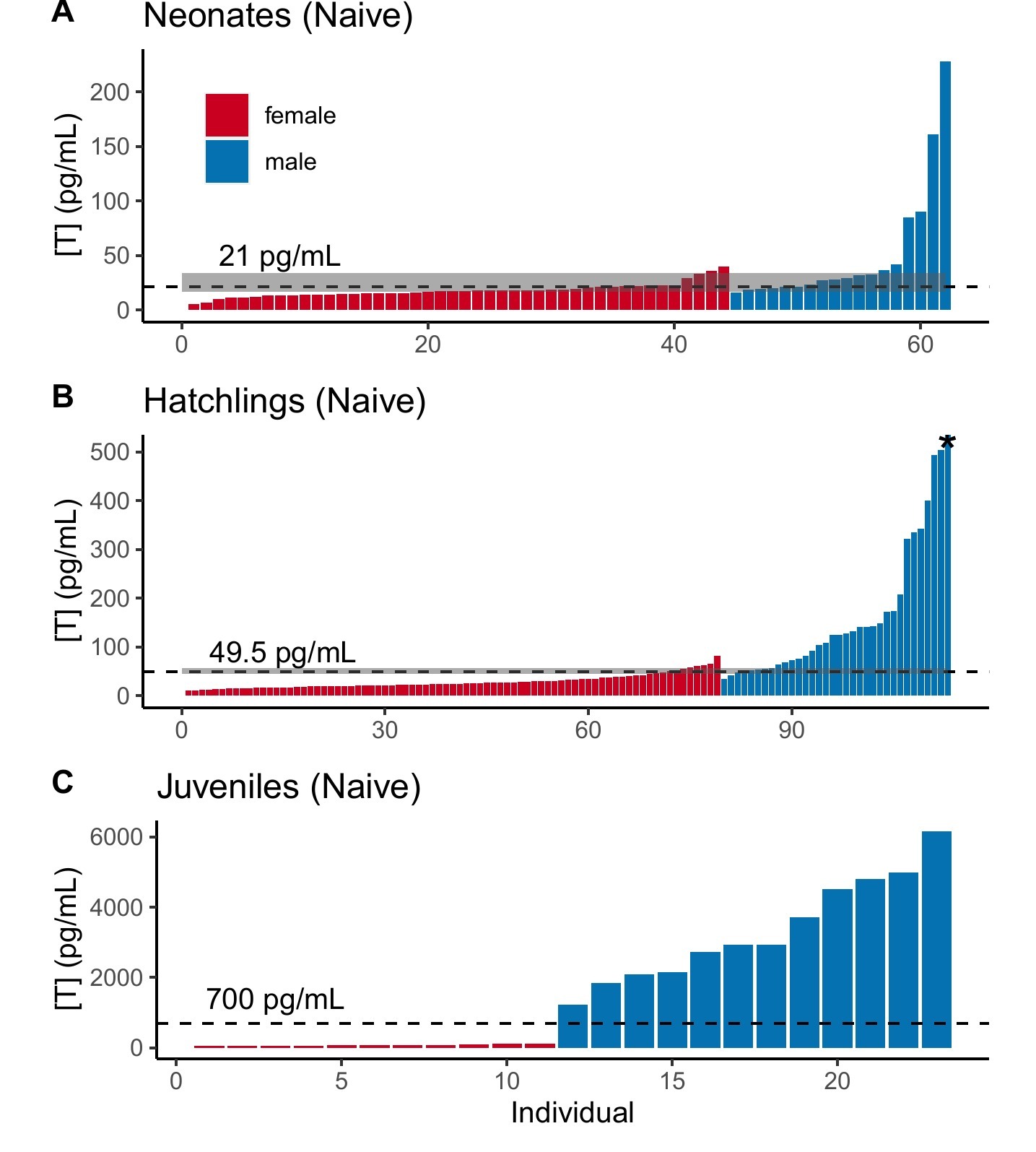
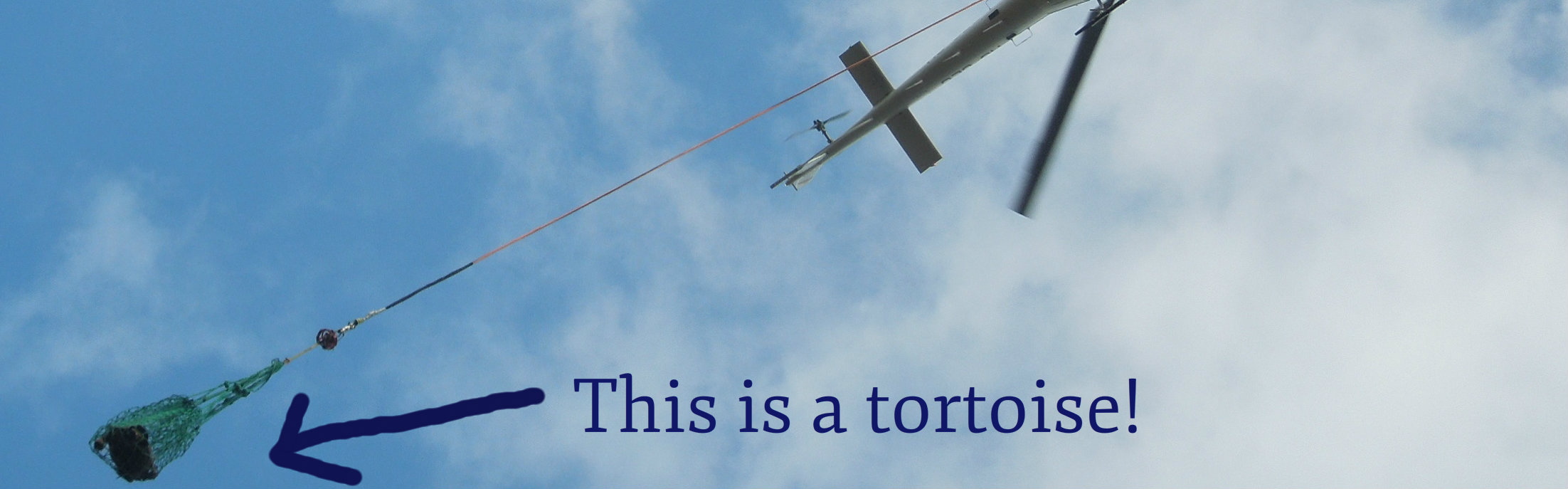
In the 19th century, populations of giant tortoises in the Galapagos Islands were decimated by whalers and pirates, who kept and killed tortoises on their ships as a resilient source of fresh meat for long ocean voyages. Particularly hard-hit were “saddlebacked” species that inhabited the islands’ arid lowlands closer to the coasts. Of the five saddlebacked species, two have been declared extinct: Chelonoidis elephantopus from Floreana Island and C. abingdonii from Pinta Island (the latter only recently declared extinct in 2012 with the death of the Lonesome George). However, geneticists have recently discovered that, through the translocating behaviors of the very same sailors, the genotypes of these extinct species still exist within individuals of mixed ancestry on Wolf Volcano on Isabela Island. An expedition in 2015 recovered some of these mixed ancestry tortoises and brought them into captivity with the hope of starting a captive breeding program to restore tortoise populations on Floreana and Pinta Islands that represent the original genotype of the native species. ...

January 23, 2020 · Elizabeth Hunter

Understanding the conservation status and habitat needs of the pygmy rabbit

The A.P.E. lab is part of a larger team at UNR investigating the population genetics and demography of the pygmy rabbit (Brachylagus idahoensis) in the Great Basin. To stay up to date on the pygmy rabbit project, led by APE lab PhD student Miranda Crowell, check out her website UNR collaborators: Marjorie Matocq Peter Weisberg and Tom Dilts Jim Sedinger Other collaborators: Sheldon and Hart National Wildlife Refuges, Nevada Department of Wildlife, Great Basin Landscape Conservation Cooperative, Greater Hart-Sheldon Fund Publications: Crowell, M.M., Matocq, M.D., Dilts, T., Shoemaker, K.T. In prep. Turnover in pygmy rabbit (Brachylagus idahoensis) site and burrow activity in the Great Basin. Conservation Biology. ...

January 17, 2020 · Kevin Shoemaker

Predictive modeling of plague die-offs in prairie dog colonies

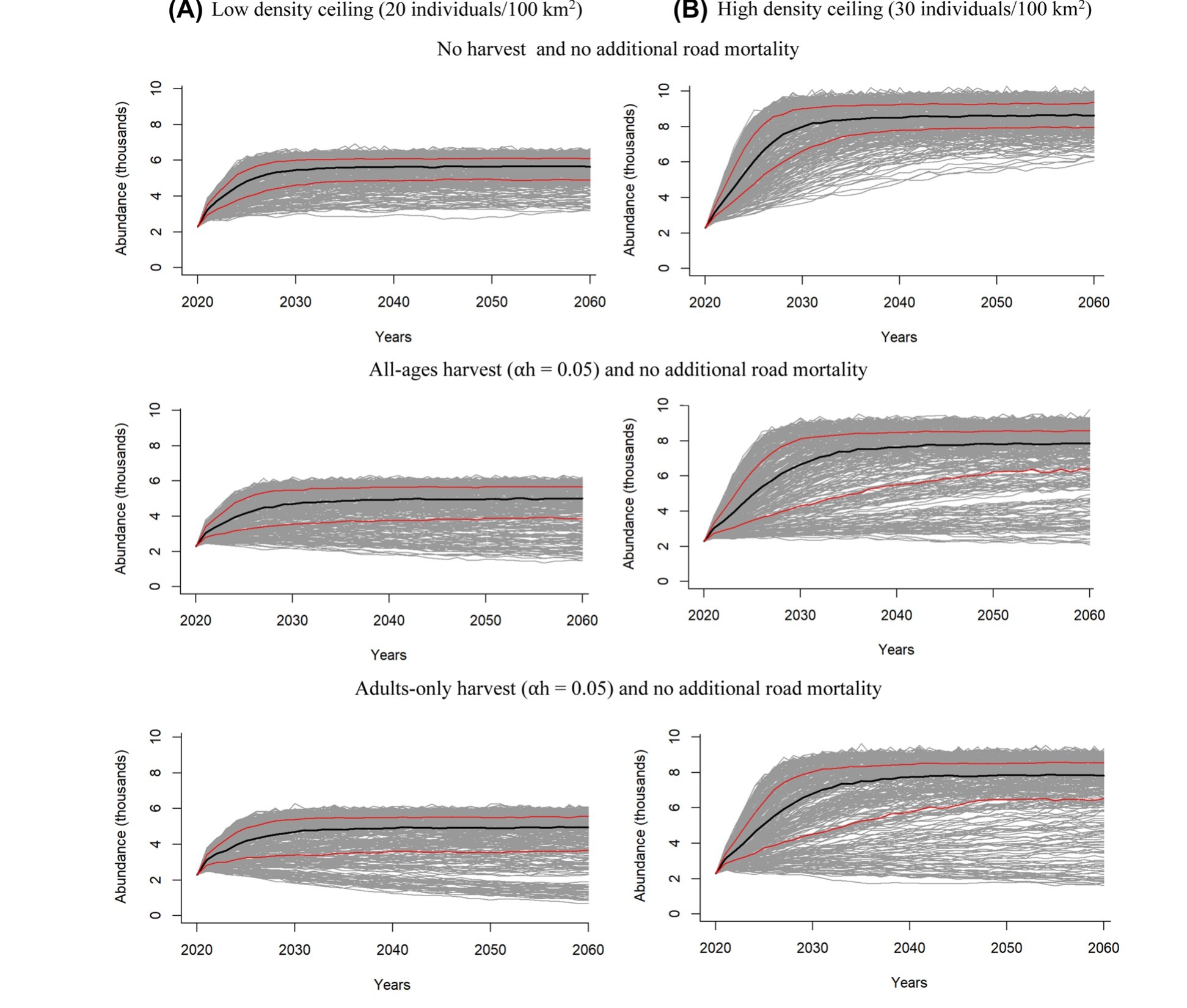
Several published studies have already shown that temperature, precipitation and topography can affect the probability of a die-off event. However, a broader synthesis of datasets from across the BTPD range may enable more accurate prediction of when and where die-offs will occur. The APE lab is leading a large collaborative project to create predictive models of BTPD colony die-offs caused by the plague bacterium. We have acquired colony history data from across the BTPD range and are working on using machine learning techniques to create a model of plague outbreaks that can help managers determine how best to target their anti-plague management activities (such as “dusting” for fleas and vaccine administration). This model will also help us better understand the selection pressures that could lead to genetic resistance to plague. ...

October 23, 2018 · Elizabeth Hunter

Understanding the potential for widespread plague resistance in prairie dogs

Prairie dogs are keystone species of North America’s central grasslands, and have experienced dramatic population reductions over the past century due to sylvatic plague, a highly virulent disease introduced to North America ca. 1900. The APE lab is involved in building a novel host-resistance modeling framework to investigate the genetic, demographic and environmental conditions that promote or impede resistance to plague and other similar virulent pathogens in complex and dynamic ecosystems. The prairie dog-plague system provides an excellent model to understand the conditions under which evolutionary rescue occurs in complex and dynamic ecological systems, and will help illuminate a novel and potential large-scale conservation approach to address 1) the biggest threat facing the prairie dog ecosystem that spans from Canada to Mexico - plague and 2) species around the world threatened with novel diseases and climate change. ...

January 17, 2018 · Kevin Shoemaker

Understanding the broader ecological impacts of PJ removal

Investigating the broad ecological impacts of Pinyon and Juniper removal in Nevada Thousands of acres of pinyon and juniper woodlands (PJ) will be removed over the next four years to support targeted wildlife populations, notably Greater sage-grouse. We are investigating the effects of PJ removal on insect communities and the bats and reptile species that rely upon them using a rigorous experimental design. Insects can serve as useful indicators of natural disturbances, provide critical pollination services, and represent a major wildlife food resource for many species, including an impressive diversity of bats and reptiles. Little is known about habitat use and disturbance tolerance for bats and reptiles in the Great Basin. For example, some bat species may benefit from tree removal (e.g., cleared areas may improve foraging or success), while other species may be negatively impacted by tree removal (e.g, loss of roosting sites). We are establishing a set of fixed transects, each spanning a gradient from sagebrush steppe to PJ woodland and monitored 3 to 4 times annually. Transects will be established in four project areas distributed widely across the Great Basin- including the Sheldon-Hart refuges and the Ely region (near Great Basin National Park). ...

October 12, 2016 · Kevin Shoemaker and Danielle Miles